5 in stock

This book explores the lives of the Four Rightly Guided Caliphs—Abu Bakr Siddiq, Umar Farooq, Uthman ibn Affan, and Ali ibn Abi Talib (may Allah be pleased with them all). Each was a close companion of the Prophet Muhammad (peace be upon him) and a shining example of faith, justice, humility, and leadership. From Abu Bakr’s unwavering loyalty, Umar’s unmatched justice, Uthman’s generosity, to Ali’s courage and wisdom, their lives shaped the foundations of the Muslim Ummah. Rich with history and spiritual lessons, this work offers timeless inspiration from the men who carried forward the Prophet’s mission and left behind legacies that continue to guide Muslims around the world.
5 in stock

Uthman ibn Affan (may Allah be pleased with him), the third Caliph of Islam, served for twelve years—the longest tenure among the Rightly Guided Caliphs. Under his leadership, the Muslim community experienced significant economic growth, and he initiated numerous projects that elevated the overall quality of life. A gentle, peace-loving, and generous leader, Uthman (ra) was known for his kindness and liberal outlook. Though he possessed all the noble qualities of a devout Muslim, his humility and unmatched generosity stood out most prominently. One of the wealthiest men of the Quraysh, he devoted the majority of his wealth to supporting the needy and advancing the cause of Islam. He was especially generous toward orphans, widows, and the underprivileged, offering aid without hesitation. Despite his immense wealth and authority, Uthman (ra) lived simply and remained deeply humble. A man of deep faith and unwavering principles, he never compromised his religious convictions, regardless of the pressures he faced. The Prophet Muhammad (peace be upon him) gave him the glad tidings of Paradise on three separate occasions—an honor few have received. His character, leadership, and piety continue to inspire Muslims around the world. Uthman (ra)’s legacy is one of selflessness, sincerity, and steadfast devotion to Allah.
5 in stock

Umar Farooq (may Allah be pleased with him), the second Caliph of Islam, ruled with unmatched justice and humility for approximately ten years, overseeing an empire that spanned 2,251,030 square miles. His leadership was rooted firmly in the guidance of the Qur'an, and every decision he made reflected a deep commitment to the commands of Allah. Despite governing a vast and powerful empire, Umar (ra) lived with remarkable simplicity and humility. He wore garments patched many times over, slept on the bare floor, and sustained himself with modest food. When traveling—even to distant lands—he took only one servant and a single camel, never seeking luxury or privilege. His profound sense of justice ensured that all people under his rule, whether Muslim or non-Muslim, were treated with fairness and dignity. He feared Allah deeply and loved Him sincerely, allowing that reverence to shape every aspect of his governance. Umar Farooq (ra) was not only a political leader but a spiritual guide and moral compass for his people. His life stands as a shining example of how power can be wielded with righteousness and humility. In the history of leadership, few—if any—can compare to his legacy. He remains a unique figure whose rule continues to inspire generations.
5 in stock

Ali ibn Abi Talib, the cousin and son-in-law of the Prophet Muhammad, was also one of the members of the Prophet’s household. The Prophet took him into his care when he was only 5 years old and gave him an excellent upbringing. And from then onwards, he remained with the Prophet until he married the Prophet’s daughter Fatima after the migration to Madinah. In fact, he was so close to the Prophet that once the Prophet said to him, “You are of me, and I of you.” This closeness, however, entailed great responsibility along with constantly being tested with trying situations. In the course of time, Ali became well-versed in Islamic knowledge, achieved profundity in religion and lived a life of deep realization and spirituality. The Caliphs Abu Bakr, Umar and Uthman used regularly to consult him in matters of importance. After Uthman’s death, Ali was chosen to be the fourth Caliph of Islam. Ali loved and obeyed Allah and His Messenger so much that he was given the title of al-Murtada, or the one with whom Allah is pleased.
5 in stock
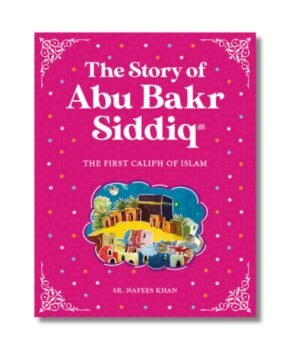
The Story of Abu Bakr Siddiq is a compelling account of one of the most revered figures in Islamic history. This book delves into the life, character, and legacy of Abu Bakr Siddiq (may Allah be pleased with him), the first Caliph of Islam and closest companion of the Prophet Muhammad (peace be upon him). Known for his unwavering faith, humility, and wisdom, Abu Bakr played a crucial role in the early development of the Muslim community. The book explores his early acceptance of Islam, his generous support for the Prophet, and his steadfast leadership during times of crisis. Through vivid storytelling and authentic sources, readers gain insight into his spiritual strength and moral integrity. His pivotal role in preserving the unity of the Muslim Ummah after the Prophet’s passing is examined in detail. The book also highlights his contributions to Islamic governance, justice, and social welfare. From freeing enslaved Muslims to guiding military campaigns, his actions reflected deep compassion and firm resolve. Abu Bakr’s deep devotion to God and commitment to truth serve as timeless lessons for all generations. The narrative brings forth not only historical events but also spiritual reflections on his exemplary character. Designed for both students of Islamic history and general readers, this work offers inspiration and knowledge in equal measure. It is a tribute to a leader whose legacy continues to illuminate the path of righteousness.
5 in stock
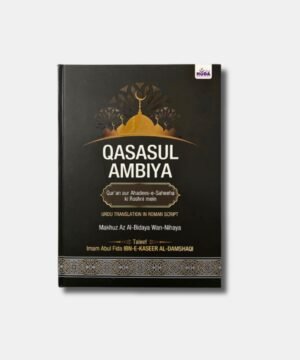
Qisasul Ambiya Urdu Trnslation in Roman Script(قصص الأنبياء), often translated as "Stories of the Prophets," is a genre of Islamic literature that narrates the lives and stories of prophets recognized in Islam. These narratives are based on the Quran and other Islamic sources, elaborating on the brief mentions of prophets found in the Quran. Urdu Trnslation in Roman Script
Khaaliq-e-kaaenaat ne jab Bani Aadam ko rooe zameen par basaaya to waqt guzarne ke saath saath bani naw-e-insaan mein khaalis tauheed ki jagah shirk. But-parasti aur digar akhlaaqi kharaabiyaan dar aaeen. Insaaniyat ko us ki asli raah par laane ke liye. Allah Ta'aala ne aasmaani hidaayat irsaal karne ka silsila shuru kiya aur pai-darpai ambiyaa wa rusul mab'oos farmaae. Ye nufoos-e-qudsiya tamaam zaahiri aur baatini khoobiyon ke paikar the. Ek taraf ye giroh-e-ambiya agar husn-o-jamaal mein yaktaae rozgaar tha to doosri taraf husn-e-akhlaaq. Be-misaal seerat-o-kirdaar aur aa'la darja ki shujaa'at, himmat aur isteqaamat se bhi aaraasta tha.
5 in stock

The first four caliphs of Islam—Abu Bakr, Umar ibn al-Khattab, Uthman ibn Affan, and Ali ibn Abi Talib, may Allah be pleased with them all—are collectively known as the Rightly Guided Caliphs. These noble leaders were among the closest companions (Sahabah) of the Prophet Muhammad (peace be upon him). Their lives stand as timeless examples of piety, humility, and devotion, serving as a source of inspiration for believers across generations.
Despite ruling over a vast empire, these caliphs led lives of remarkable simplicity, embodying the values of justice, selflessness, and moral integrity. Their sacrifices and steadfast dedication were instrumental in preserving the Quran and spreading the message of Islam to far corners of the world.
The Prophet Muhammad (peace be upon him) once said, "My Companions are like stars. If you follow any of them, you will be guided to the right path." In light of this profound statement, the lives and stories of the Sahabah provide invaluable guidance and spiritual upliftment for all who seek the path that pleases Almighty Allah.
2 in stock

THE BIRTH OF PROPHET MUHAMMAD, This enchantingly illustrated board book, delightfully introduces to the children the inspiring life and teachings of the Prophet Muhammad.
2 in stock